
A ring roller mill is great for dry grinding calcium carbonate. It is efficient and produces high-quality products. Here’s an overview of its operation, benefits, and applications.
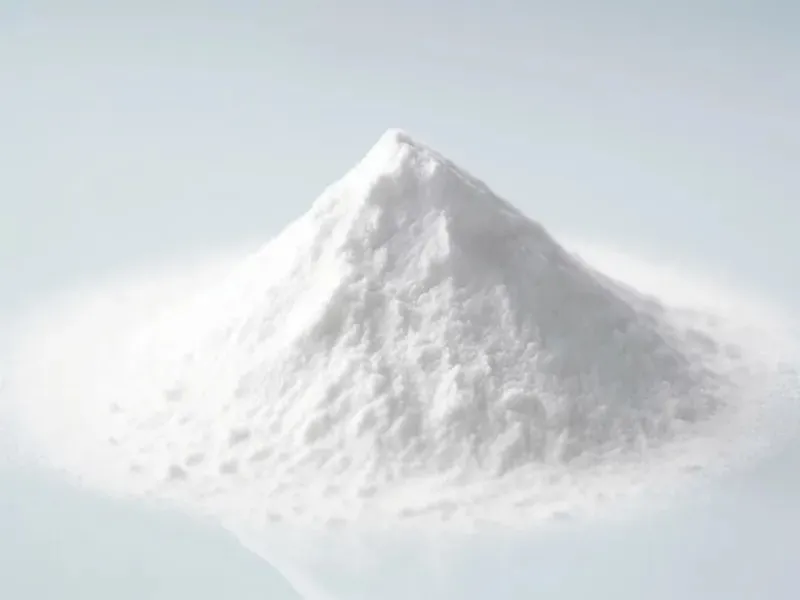
Overview of Ring Roller Mills
Working Principle
Ring roller mills, or ring and ball mills, use a mix of impact and shear forces to grind materials. The key components include:
Grinding Ring: A circular path where the grinding occurs.
Rollers: They are within the ring. They exert pressure on the material, reducing its size.
The material is fed into the mill, where it is crushed between the rollers and the grinding ring. The centrifugal force keeps the material in contact with the grinding surfaces. This enhances the grinding efficiency.
Advantages
- High Efficiency: Ring roller mills can make finer particles than traditional ball mills. Their design and operation allow this. They usually make calcium carbonate powders. Their particle sizes range from 5 to 45 microns.
- Energy Savings: These mills use less energy than other grinding methods. So, they are a cost-effective choice for large-scale production.
- Versatility: They can grind any hardness of calcium carbonate, both coarse and fine.
- Reduced Maintenance: Ring roller mills often have lower wear rates. This leads to less maintenance.
Applications
Ring roller mills are common in industries that need finely ground calcium carbonate. They use it for various purposes.
Plastics and Paints: Used as fillers to enhance properties while reducing costs.
Pharmaceuticals: For producing uniform particle sizes essential in drug formulation.
Food Industry: Employed in food processing as a calcium supplement or stabilizer.
Comparison with Other Grinding Mills
| Feature | Moinho de rolos de anel | Ball Mill | Raymond Mill |
|---|---|---|---|
| Particle Size Range | 5 – 45 microns | 20 – 200 mesh | 80 – 600 mesh |
| Energy Efficiency | High | Moderate | Moderate |
| Maintenance Requirements | Low | Moderate | Moderate |
| Grinding Mechanism | Impact & Shear | Impact & Attrition | Compression & Grinding |
Calcium carbonate powder can be used for brick‑making, but it cannot be used alone; it works as filler, fluxing agent or pore‑forming agent mixed with clay or cement‑based materials.
Fired clay bricks
- Recommended particle size: 75‑150 μm (100‑200 mesh). Particles larger than 0.5 mm are forbidden. Ultra‑fine particles below 30 μm are also unfavorable for durability.
- Dosage: 2%‑10 wt% of clay, preferred 2%‑5 wt%. Firing temperature around 900 °C. Slow heating rate between 700‑850 °C for CO₂ release.
- Risk warning: Coarse calcium carbonate decomposes into CaO during firing. Hydration of free CaO causes volume expansion, lime bursting and brick cracking.
Non‑fired cement‑based bricks
- Recommended particle size: 45‑150 μm (100‑325 mesh, 325 mesh widely used).
- Function: inert filler for cost reduction and grading adjustment.
The ring roller mill is a great choice for dry grinding of calcium carbonate. It has excellent particle size control and low energy use. Its use in many industries shows its versatility. It is effective at making high-quality calcium carbonate powder.
 Português
  English
  العربية
  Español
  Français
  Русский
  Tiếng Việt